Established in 2002, SCP was created in response to growing concerns about educational disadvantage and the high rates of early school leaving, particularly in socio-economically challenged communities. The programme was build on the experience of two earlier pilot programmes: The 8-15 year old Early School Leaving Initiative and the Stay in School Retention Initiative.
Purpose and Goals
The programme’s core mission is to support students at risk of early school leaving, and aims to improve attendance, participation, and retention in both primary and post-primary education.
Long-term, it seeks to ensure that every young person completes the Leaving Certificate or an equivalent qualification, enabling access to further education, training, or employment.
Governance and Funding
There are currently over 120 SCP projects across Ireland. South-West Wexford SCP is one of five projects in County Wexford. Local SCP projects are managed by Local Management Committees (LMCs), which include participating school principals and community representatives. LMCs ensure community involvement in the planning and delivery of local programmes, and are accountable for project outcomes.
South-West Wexford SCP was established in 2007, when the national School Completion Programme underwent a major expansion, and was extended to all urban/town primary and second-level schools participating in DEIS.
In 2021, South-West Wexford SCP was expanded to include three new schools, resulting in the 8-school project (four primary and four secondary schools) that make up today’s project.
South-West Wexford SCP
South-West Wexford SCP was established in 2007, when the national School Completion Programme underwent a major expansion, and was extended to all urban/town primary and second-level schools participating in Department of Education's DEIS programme.
In 2021, South-West Wexford SCP was expanded to include three new schools, resulting in the 8-school project that make up today’s project.
The role of the Local Management Committee is to provide an efficient and effective educational welfare support service to children and their families at local level, promoting student attendance, participation and retention.
The Local Management Committee is responsible for:
- The governance and direction of the project
- The appointment and management of local staff, and
- Ensuring that funding is deployed efficiently and effectively, and in line with the agreed annual plan.
South-West Wexford SCP has three subcommittees to assist it in its work:
1. The Governance Sub-committee
2. The Finance Sub-committee
3. The Staffing Sub-committee.
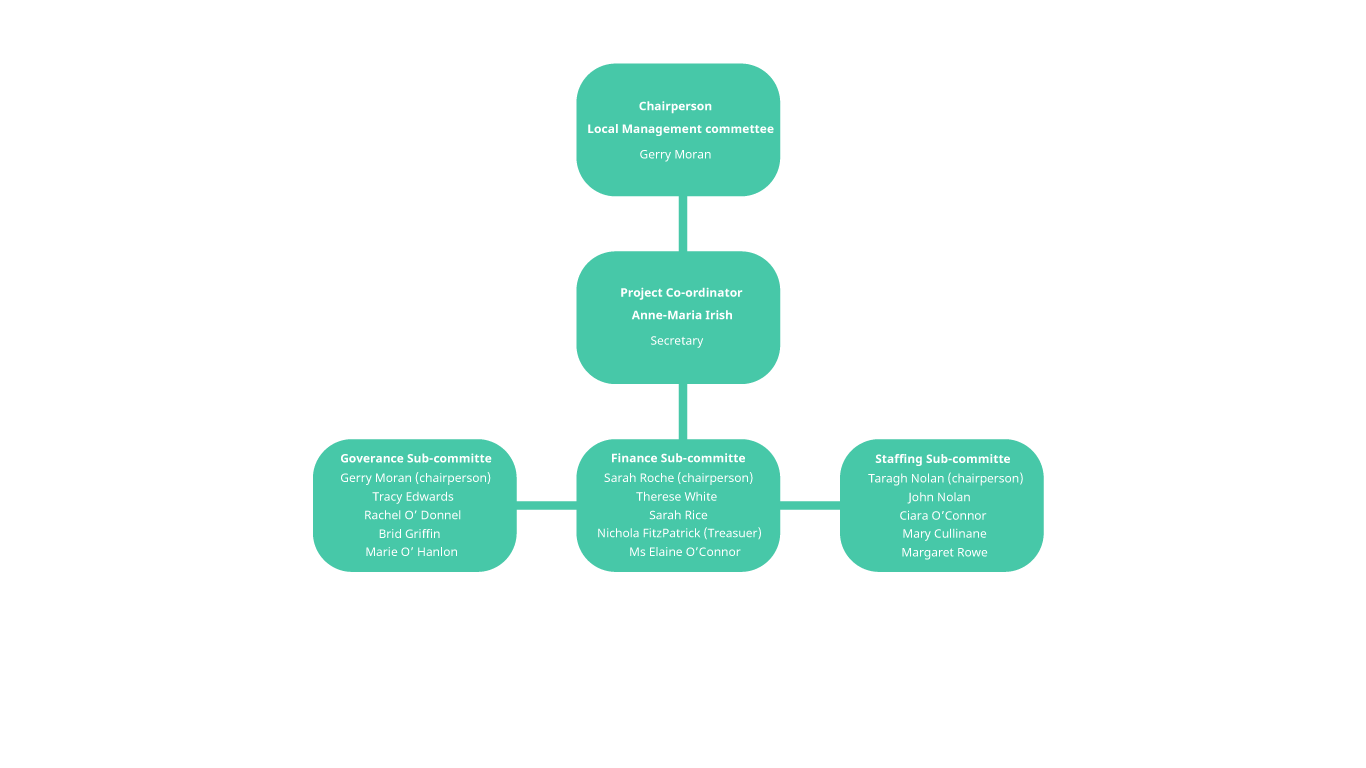
The Governance Sub-committee serves as a vital element in enhancing the effectiveness and accountability of South-West Wexford School Completion Programme (SWWSCP), supporting sound governance practices that promote integrity, transparency, and sustainability.
The Committee’s primary responsibilities is to:
1. Developing SWWSCP’s governance framework, including the assessment of the effectiveness of governance policies and practices.
2. Monitor SWWSCP’s compliance with legal and ethical requirements, regulations, and laws,
3. Ensure that SWWSCP adheres to its governance policies, procedures, and best practices.
Key roles and functions of a Governance Sub-committee:
1. Policy Development and Review: Developing, reviewing, and recommending governance policies and board member responsibilities.
2. Board Composition and Nomination: Overseeing the nomination and selection process for board members, ensuring that the board is diverse, skilled, and representative of the organisation’s stakeholder base.
3. Performance Evaluation: Evaluating the performance of the board, including conducting self-assessments and identifying areas for improvement.
4. Compliance and Risk Management: Monitoring compliance with regulatory requirements and internal policies, assessing risks and recommending strategies for mitigation.
5. Training and Orientation: Providing orientation and training for new board members to ensure they understand their roles, responsibilities, and the governance structure of the organization.
6. Communication and Transparency: Ensuring that the organisation maintains transparency in its governance practices and effectively communicates governance policies and decisions to stakeholders.
7. Strategic Oversight: Assisting the board in aligning governance practices with the organisation’s strategic goals and objectives, ensuring a clear governance framework supports the mission and vision of the organisation.
8. Stakeholder Engagement: Engaging with key stakeholders to gauge their perspectives and ensure that the governance practices are responsive to their needs and concerns.
9. Regular Reporting: Reports its findings, recommendations, and actions to the Local Management Committee, providing insights that can influence decision-making and strategy.
The Staffing Sub-committee serves a vital role in ensuring a competent workforce, ensuring SWWSCP is well-equipped with the right staff and resources to effectively execute its mission and serve its community.
The Committee’s primary responsibilities is to oversee:
1. Recruitment and Selection of Suitably Qualified Personnel: Assisting the Project Co-ordinator with advertising of positions, screening applications prioritising skills, inclusion and diversity, conducting interviews, reference checking and Garda vetting, and making recommendations to the Local Management Committee.
2. Training and Orientation: Ensuring that the necessary induction supports for new staff are in place, together with on-going access to continuous professional development, evidence-informed, developmental and trauma sensitive resources and programmes for staff to carry out their role effectively.
3. Policy Development and Compliance: Create and review policies and ensure that all staffing policies comply with relevant employment laws and regulations. Developing, implementing and monitoring strict child safeguarding policies that adhere to legal requirements and best practice is of utmost importance.
4. Staff Welfare and Support: Promote Staff Well-being and facilitate Peer Support.
5. Crisis Management: Create protocols for staff to follow in case of emergencies or critical incidents involving children, ensuring that all staff are trained in these procedures.
6. Conflict Resolution and Complaints: Provide mediation and support for resolving conflicts among staff and dealing with complaints about staff.
7. Data-Driven Decision Making: Collect and Analyse Data: Track relevant data related to staffing, outcomes for children, and any incidents, using this data to inform staff recruitment, training needs, best practice and areas for improvement.
8. Collaboration with Families and other Stakeholders: Working with families and other organisations, agencies and stakeholders involved in child welfare to have a greater understanding of the diverse needs and perspectives of the children and families served and share best practice.
9. Diversity and Inclusion Initiatives: To ensure that staffing policies and training actively promotes diversity and inclusivity, equipping staff to work with children from various backgrounds.
10. Reporting and Accountability: Maintain transparent reporting mechanisms to ensure accountability in staffing decisions and provide regular updates on staffing issues, successes, and challenges.
The Staffing Sub-committee will also oversee the issuing of staff contracts, approving increments subject to budgetary implications, and consider any applications for staff leave.
The Finance Sub-committee of South-West Wexford School Completion Programme (SWWSCP) plays a critical role in ensuring that financial resources are managed effectively and aligned with the project’s mission.
The Committee’s primary responsibilities are to:
1. Developing SWWSCP’s financial and risk management framework, including the assessment of the effectiveness of financial policies, procedures and best practice
2. Assisting the Project Coordinator in carrying out the financial administration of the project, including approving payments, budgeting and monitoring spending
3. Reporting and Accountability of financial matters to the Local Management Committee
Key roles and functions of the Financial Sub-Committee:
1. Financial Oversight: Budget Preparation, Monitoring and Financial Reporting including oversight of the project’s financial audit.
2. Policy Development: Developing and Recommending Financial Policies, Procedures and Internal Controls to ensure integrity and transparency in financial management.
3. Risk Management: Identifying and assessing potential financial risks, including budgeting shortfalls, funding instability, and compliance issues, recommending strategies to mitigate those risks, and ensuring that the project maintains appropriate insurance coverage and complies with financial regulations and reporting requirements.
4. Monitoring Grants Received and Resource Development: Overseeing the financial aspects of grants received, ensuring compliance with grant conditions and ensuring the proper reporting of expenses, together with reviewing current fundraising programs and recommending new strategies to enhance revenue generation, including grants, donations, and events.
5. Communication and Reporting: Preparing and presenting financial reports and recommendations to the Local Management Committee, ensuring that the Board is well-informed for decision-making.
6. Training and Support: Identifying training needs for financial management and facilitating opportunities to obtain these skills within the project.
7. Evaluation and Improvement: Financial Performance Review and Strategic Planning to align the project’s financial goals with the organisation’s mission and objectives.
8. Meeting Regularly: Holding regular meetings to discuss ongoing financial issues, upcoming challenges, and new opportunities, ensuring active engagement and timely decision-making.